Folio I · Active Manuscript
In collaboration with the Government of Flanders · first major Codex commission.
About the Manuscript
A long-form reading of the painters whose panel work seeded every algorithm of attention that came after.
The Flemish Manuscript is a nine-chapter long-form reading of the Flemish Masters whose panel work seeded every algorithm of attention that came after — van Eyck, Rubens, van Dyck. The manuscript is made in the medium Matthew Olivier is the first artist to formally claim — the algorithmic feed itself. Each chapter takes a single painting as its case study, reading it not as a relic but as a piece of working software: a designed system for managing where the eye goes, what it lingers on, and what it chooses to remember.
Commissioned in collaboration with the Government of Flanders to coincide with their international cultural programme, the manuscript follows the survivors of Northern panel painting through their afterlives — how a fifteenth-century Bruges altarpiece became the operating system for five centuries of how to direct a viewer's eye, and what that inheritance means now, in the era of the algorithmic feed.
All chapters are written; release proceeds on the published schedule. Five chapters are on view; four more are coming soon.
— Visit —
Government of Flanders →I · Selection
Paintings enter the manuscript when they answer a question the present is asking — not in the order they were made or hung. The codex follows the argument.
II · Method
Each chapter reads composition, sightlines, narrative compression, and the management of attention — the same questions modern platforms ask, asked five centuries earlier.
III · Cadence
Roughly one new chapter every few weeks. Each is released as a short video essay with the painter's notes and footnotes. The work is the practice.
Chapter V · Latest Release
Anthony van Dyck · 1599–1641
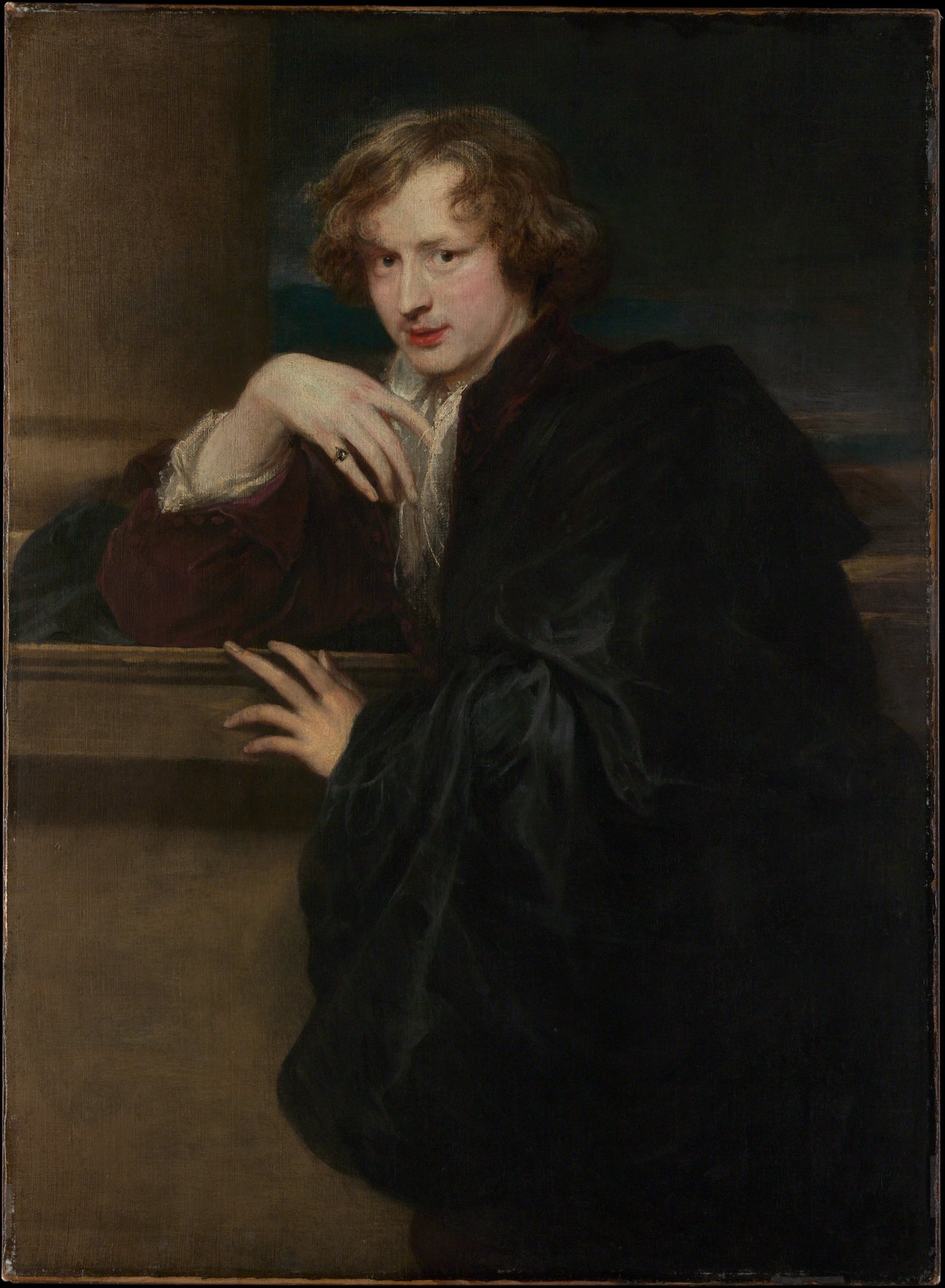
Van Dyck taught two centuries of European courts how a portrait could deliver a face to power without delivering the sitter. A reading of his arc — Antwerp to London, Rubens to Charles I — as the first masterclass in self-image as algorithmic asset: composition tuned for the kind of looking that decides whether a crown holds.
Watch the essay →Chapters · 5 of 9 bound
Bound chapters open into the full essay. Upcoming chapters are listed by painting; click "Notify me" to subscribe to release alerts.
Chapter I
Jan van Eyck
Watch the essay →Chapter II
Clara Peeters
Watch the essay →Chapter III
Quinten Matsys
Watch the essay →Chapter IV
Peter Paul Rubens
Watch the essay →Chapter V
Anthony van Dyck
Watch the essay →Subscribe to the Manuscript
Subscribers receive each chapter of The Flemish Manuscript as it binds — along with chapters from the other manuscripts, codex announcements, and studio news.
Sent as chapters bind · No marketing · Unsubscribe anytime
About
Codex Algorithm is the major conceptual artwork of Matthew Olivier — visual artist and conceptual artist, with major practices in painting and writing. The work is a long-form sequence of algorithmic essays — short films and writings — that read paintings from across the historical record as early instances of the attention-engineering we now call the algorithmic feed. All essays are written by the artist; the narrator's voice is rendered through synthesis as a deliberate mask, in keeping with the work's argument that the medium is the message. The work treats the algorithmic feed itself as both venue and medium. The Flemish Manuscript is the codex's first major commission.
Enter the Codex →